
This is worth your time: the latest AEI’s What the Hell Is Going On? podcast episode with Danielle Pletka, Marc Thiessen, and Miad Maleki. It is one of the clearer, more grounded discussions of the Strait of Hormuz situation and the U.S. response than most of what has been written in the past week.

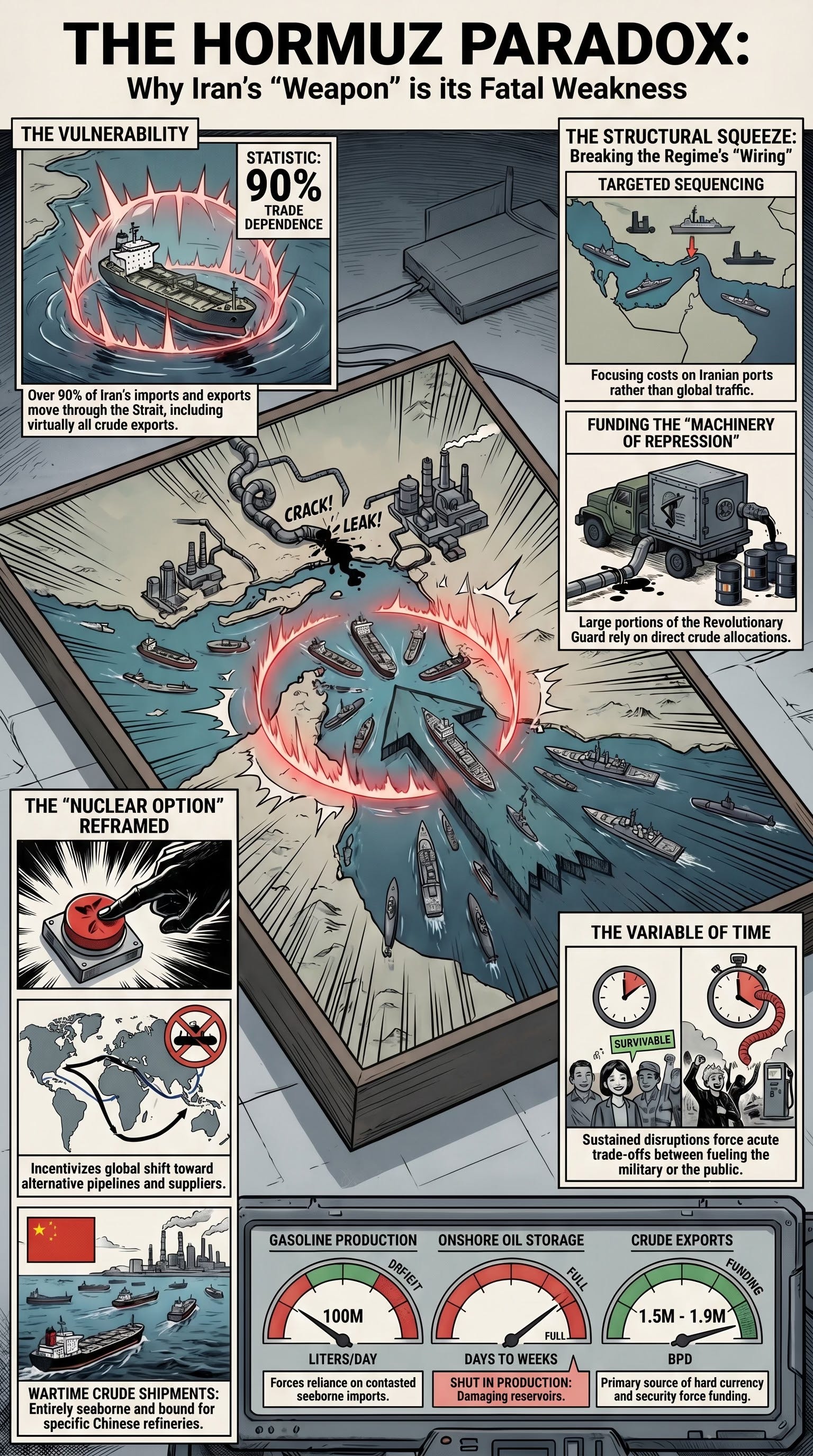
Iran’s latest move in and around the Strait of Hormuz was meant to project strength, but it highlighted something more basic: the regime has tied much of its economic survival to a narrow maritime corridor that it cannot afford to destabilize for long. When Tehran signals it is willing to jeopardize shipping there, it is not just threatening others; it is also putting at risk its own ability to sell oil, import fuel, and bring in everyday consumer goods. That is a dangerous place to be for a government already juggling inflation, currency weakness, and periodic domestic unrest.
The American response has targeted that vulnerability rather than trying to match Iran escalation for escalation. By focusing on naval control and restricting Iranian‑linked shipping while keeping broader commercial traffic moving, Washington has turned geography into a source of leverage. The point is not simply to “send a message,” but to create sustained friction at exactly the point where Iran has the fewest easy alternatives and the least slack in its economy.
How long this posture is maintained will matter more than any single strike or announcement. A brief disruption is painful but manageable for Tehran and can be spun as a temporary shock. A blockade that drags on forces the leadership to choose between economic damage at home and its current course abroad. That time dimension—weeks versus months—is where policy choices in Washington and allied capitals will determine whether this e


